PREDICTIVE COST MODELING - Technical White Paper

RSMeans Business Solutions Predictive Cost Models offer cost standardization for facility owners, architects and construction managers. Managers of construction programs with a portfolio of multiple buildings, either in a campus environment or across regions of the U.S., apply RSMeans models and databases for uniform construction design and corporate-wide construction budgeting. Cost modeling accuracy is within 93 percent of actual cost and useful for third party validation, negotiating contractor's bids and monitoring as-built costs. Cost modeling drives the life cycle decision process in the early design phase.

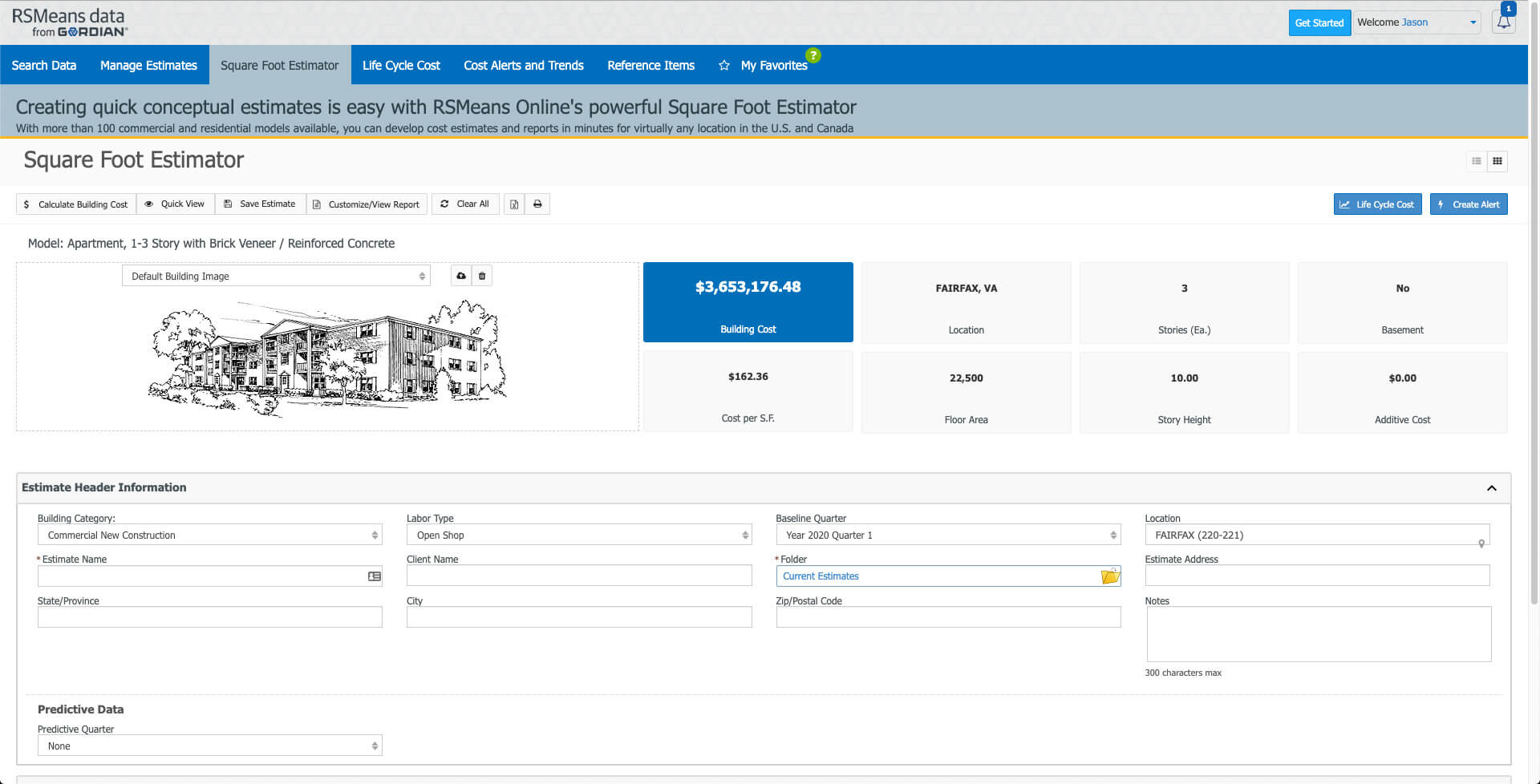
RSMeans has a proprietary database of 72 standard commercial building types and develops historical and predictive cost models from this database. The models contain 60 assemblies further refined by 15 RSMeans proprietary cost-relationship algorithms.

RSMeans engineers create custom client models from actual client schematics and building plans that incorporate construction budgets and cost history. Reed Construction Data/RSMeans benchmark databases are applied to the models to project costs forward in time, historically, and across various geographic locations.

ADVANTAGES OF PREDICTIVE COST MODELING
  • Standardization of Estimating Procedures
  • Budget and Forecasting Tool
  • Baseline for Regional Cost Comparison
  • Third Party Validation of Contractor's Bids

APPLICABLE TO MANY SECTORS
  • Retail services, banks, shopping malls and restaurants
  • Universities and school districts
  • Municipal buildings and government building portfolios
  • Health care systems including hospitals and free-standing centers
  • Corporate and enterprise-wide campuses

Examples

The amount of data required for construction estimating lends itself to a Predictive Cost Model, which not only simplifies the entire process but automatically captures repetitive data from established sources. Models also provide an audit trail about the development of the estimate.

As an example in varying locations, construction costs in Alabama or Mississippi are only 70 to 80 percent of national averages; however, costs in New York, San Francisco and Anchorage are 130 percent of national averages. The variance between locations is 60 percent or more which is significant for construction programs involving many geographic areas. Location differences that affect estimates are established with RSMeans CCI (Construction Cost Index) which provides labor, materials and equipment cost data to a specific zip code.

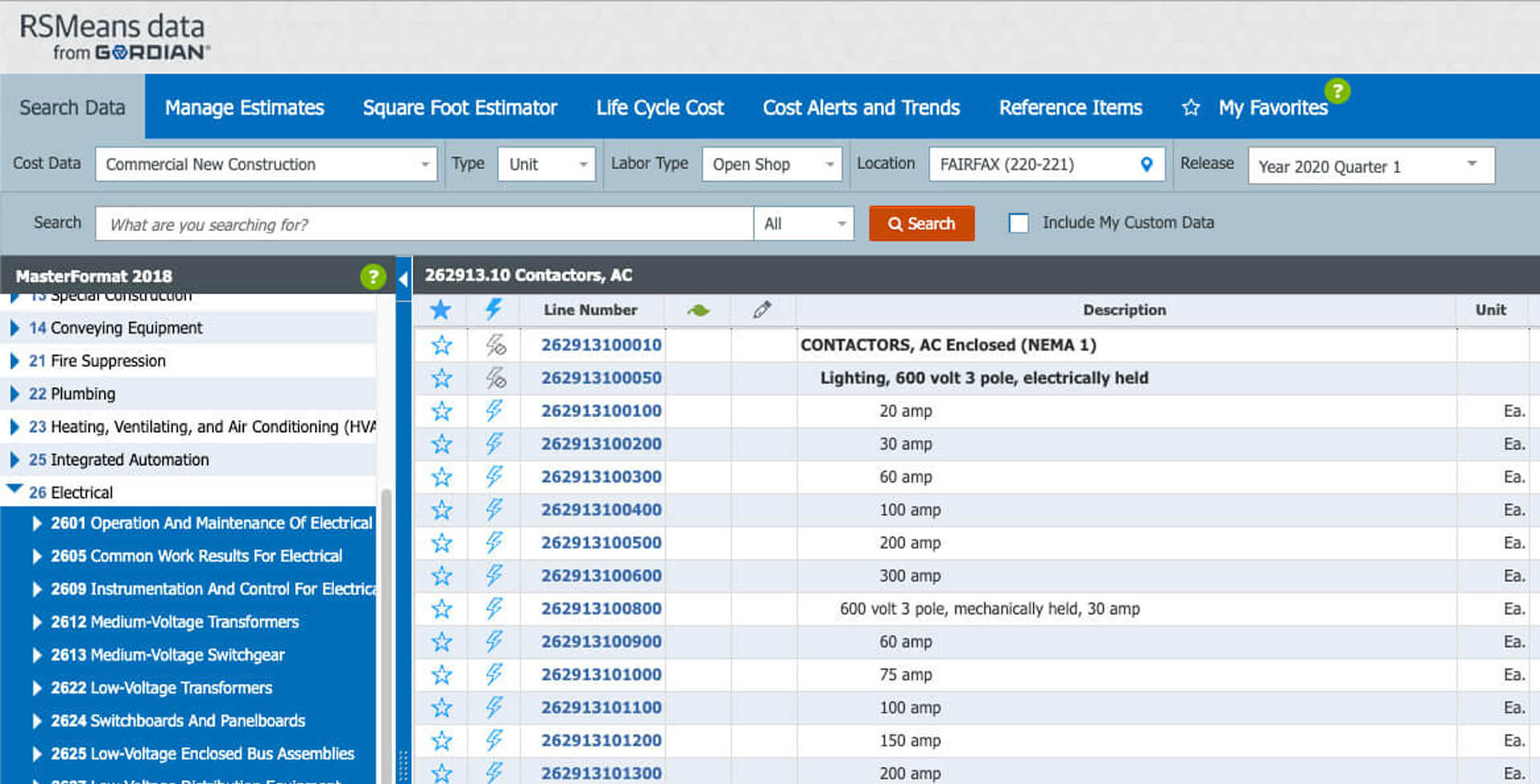
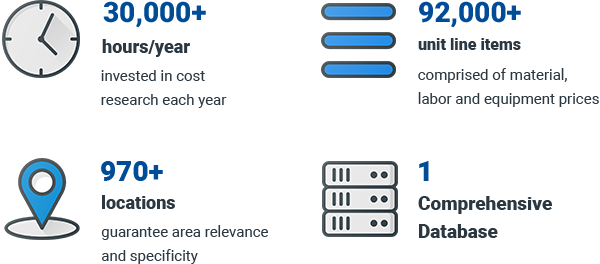
With RSMeans national databases covering 900+ locations in the U.S., a cost model built from data for one location is easily adjusted to reflect regional costs anywhere in the country. This capability allows Predictive Cost Models to be used for evaluation of construction budgets as well as a negotiating tool and third party validation of contractor's bids. Engineers develop Predictive Cost Models in Means CostWorks™ a proprietary system that develops cost models that apply material and labor data from Means' extensive databases. When modeling data is linked to client benchmark data, the results can be extrapolated to any location in the U.S.

LINK TO BUSINESS CASE DOE

For more information and a web ex demonstration, E-Mail
Laura Dempsey, Senior Consultant
RSMeans Business Solutions
404-433-3583

Contact Us

Contact RSMeans Business Solutions
1-800-448-8182
consulting@rsmeans.com

Clients
U.S. Army Corps of Engineers
GSA
Pentagon
U.S. Department of Energy
FEMA
U.S. Department of Labor
Clark Realty Builders
Forest City Chicago
Firestone Building Products
Armstrong World Industries
Portland Cement Association
CABA
Georgia Pacific
Milliken
Alcan Cable
Steelscape
Institute for Water Resources
NIBS
VA Healthcare
Hunt Building Corporation